
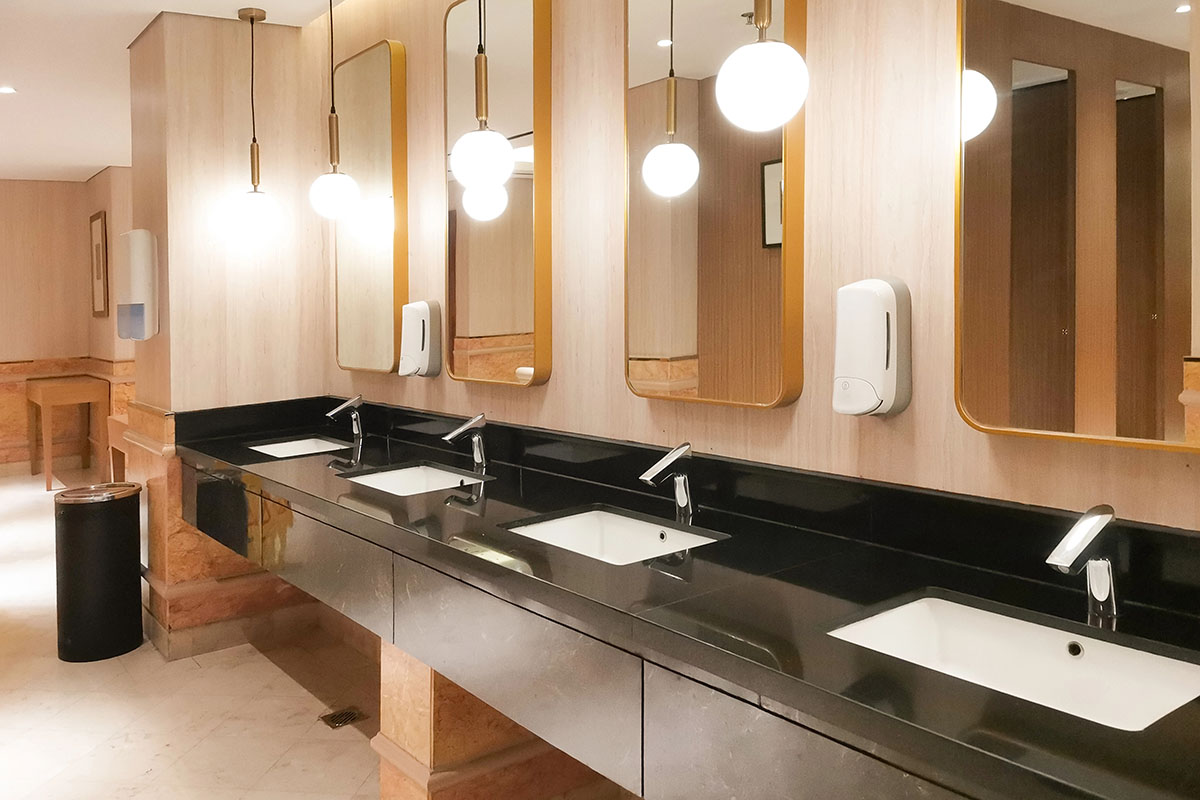
Commercial restrooms play a pivotal role in shaping how employees, customers, and visitors perceive a business. A clean, modern restroom signals that management values health, safety, and operational performance. Conversely, outdated facilities with messy counter surfaces, jammed paper towel dispensers, and overflowing trash cans leave a negative impression that is difficult to erase.
In recent years, commercial facility managers across Central Texas have increasingly moved toward automated restroom fixtures. Modern touch-free equipment replaces manual pumps, levers, and handles with infrared sensors. This transition transforms public and employee restrooms into cleaner spaces. Beyond health benefits, upgrading to automated touchless dispensers delivers measurable financial savings by lowering supply consumption and improving maintenance routines.
The Health Impact: Stopping Surface-to-Hand Cross-Contamination
High-traffic commercial restrooms serve as major sites for bacteria and viruses. Traditional manual soap dispensers, flush handles, and paper towel levers are touched by hundreds of unwashed hands daily. Each manual interaction creates a point of cross-contamination.
Automated sensor-based equipment eliminates physical contact during essential handwashing routines. When users can wet their hands, apply soap, dry off, and exit without touching a single surface, transfer drops sharply.
- Decreased Illness: Reducing cross-contamination in shared facilities lowers the spread of seasonal illness among staff.
- Safer Public Venues: High-traffic spaces like restaurants, schools, and medical offices maintain higher sanitation standards for visitors.
- Increased Handwashing: Simple hands-free fixtures encourage people to wash and dry their hands thoroughly.
Prioritizing touchless hardware creates a healthier indoor environment that supports workplace productivity and public health.
Financial Benefits: Controlling Product Use and Supply Expenditures
Upgrading restroom hardware requires upfront capital, but automated dispensers return that expenditure through controlled product distribution. Manual units allow users to pump excessive amounts of liquid soap or pull yards of paper towels in a single visit.
Automated paper towel and soap dispensers deliver precise, measured portions every time. Infrared sensors dish out exactly what is required for hand cleaning, preventing over-use.
- Pre-Set Distribution: Fixed sheet lengths and soap dosages prevent visitors from pulling or pumping excessive product.
- Less Restroom Trash: Controlling paper towel distribution reduces discarded paper piles on floors and clogged toilets.
- Lower Inventory Costs: Facilities consume significantly less bulk soap, hand sanitizer, and paper products over time.
By cutting product wastage, commercial properties see immediate and sustained reductions in monthly janitorial invoices.
Improving Facility Image and Customer Perception
Restroom cleanliness directly influences brand reputation. Studies show that customers judge the overall standard of a business by the condition of its restrooms. Cluttered, dirty, or outdated restrooms send a message of neglect that drives patrons away.
Installing sleek, modern, touch-free fixtures upgrades the visual appeal of a facility. Touchless systems eliminate liquid soap drips on countertops and keep damp paper towels off floors.
A polished, sensor-operated restroom demonstrates a commitment to high cleanliness standards. Visitors notice these details and appreciate the hygienic experience. This positive perception builds customer confidence and brand trust.
Simplifying Maintenance and Custodial Operations
Facility management teams often spend valuable labor hours attending to avoidable restroom issues. Manual dispensers require frequent refills due to uncontrolled usage, while jammed paper towel rolls disrupt daily workflow. Overflowing soap cartridges create slippery floor hazards that demand immediate attention.

Touchless automated equipment simplifies routine maintenance in several practical ways:
- Longer Refill Cycles: High-capacity touch-free dispensers hold more product and distribute it efficiently, requiring fewer refills.
- Cleaner Floors and Counters: Drip-free soap valves keep counters and floors dry, reducing manual cleaning time.
- Fewer Hardware Failures: Without mechanical levers for users to pull or slam, touchless units experience less wear and tear.
When janitorial staff spend less time clearing jams and wiping messy counters, they focus on high-value cleaning tasks across the rest of the facility.
Essential Touch-Free Upgrades for Commercial Restrooms
Upgrading restrooms does not require a complete structural renovation. Implementing targeted automated fixtures transforms a facility into a cleaner, more efficient space.
Automated Soap and Hand Sanitizer Dispensers
Wall-mounted automatic soap dispensers deliver consistent foam or liquid portions without direct surface contact. Closed-cartridge systems protect the supply from external contaminants. Placing matching touchless sanitizer units near restroom exits further supports hand hygiene compliance.
Touchless Paper Towel and Hand Drying Systems

Controlled roll-towel dispensers automatically present a single towel sheet per wave. This delivery model ensures users touch only the towel they use. For facilities seeking alternative drying methods, high-speed automated air dryers offer a paperless option that keeps waste to a minimum.
Hands-Free Faucets and Auto-Flush Valves
Automatic sensor faucets control water temperature and flow duration, eliminating wasted running water. Auto-flush valves for toilets and urinals maintain sanitary bowl conditions automatically. Together, these upgrades conserve water resources while keeping fixtures clean throughout the operating day.
FAQs
Are automated touch-free dispensers expensive to maintain?
No, touch-free dispensers are cost-effective to operate. Modern fixtures utilize long-lasting battery setups or direct power connections, while controlled dispensing cuts overall supply costs to offset any initial investment.
How do touch-free fixtures conserve water and paper?
Touch-free faucets shut off water flow when hands leave the sensor zone, stopping water waste. Automated paper towel dispensers deliver pre-measured sheet lengths, stopping users from pulling excessive paper.
Do automated dispensers work well in high-traffic commercial facilities?

Yes, commercial-grade automated dispensers are built specifically for heavy usage. Durable housings, reliable infrared sensors, and high-capacity refills keep operations smooth in busy office buildings, schools, and retail centers.
Can touch-free equipment be retrofitted onto existing restroom plumbing?
In most cases, yes. Many automated flush valves, faucets, and wall-mounted dispensers fit directly over existing plumbing and mounting footprints without major wall modifications.
How often do batteries need replacing in sensor-activated dispensers?
Commercial sensor fixtures are built for low energy draw. Most battery-powered units operate for several years or tens of thousands of uses before requiring a simple battery swap.
Modernize Your Central Texas Commercial Restroom
Transitioning to automated touch-free restrooms is a practical investment for any business. By removing physical touchpoints, facility managers reduce cross-contamination risks while cutting monthly supply expenses. Clean, touchless fixtures improve company image and streamline daily maintenance workflows for custodial staff.

Selecting appropriate equipment and setting up ongoing supply delivery keeps your restrooms running efficiently. Business Hygiene provides commercial restroom sanitation setups, including touch-free equipment, janitorial supplies, and scheduled local delivery. Reach out to Business Hygiene today to request a facility assessment and start modernizing your restrooms.