
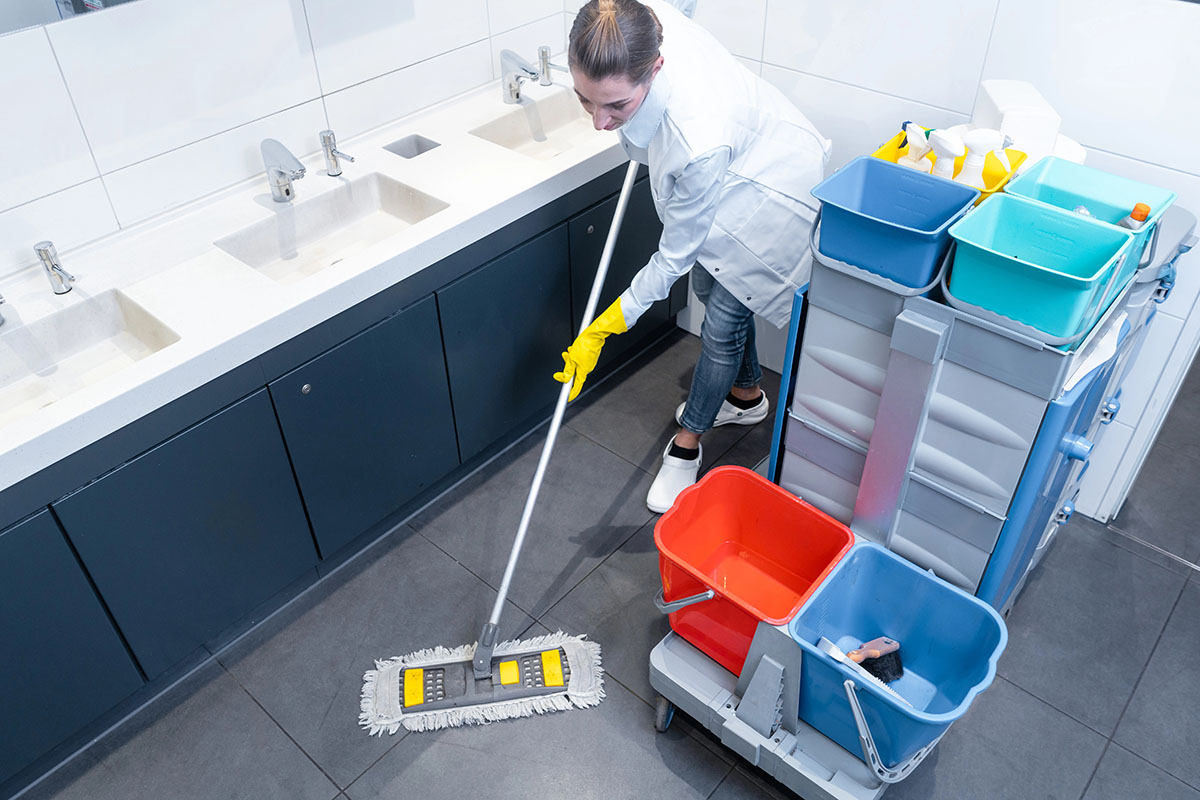
The customer experience depends heavily on details that many business owners overlook. Whether you operate a restaurant near the Square, a retail store off 35, or corporate office catering, facility cleanliness speaks volumes before your staff ever says a word.
Research consistently shows that consumers associate the cleanliness of a commercial restroom with the overall quality of a business. A single negative experience in a restroom can permanently damage customer loyalty, generate negative online reviews, and harm employee morale.
Performing a routine commercial restroom audit helps identify hidden sanitation risks before they impact your reputation. Five major odor and sanitation red flags require immediate attention from business owners.
1. Persistent Foul Odors Trapped in Porous Tile and Grout
A restroom can look visually spotless while still smelling unpleasant. When foul smells linger despite regular janitorial cleaning, the root cause is almost always porous flooring materials.
Why Standard Mopping Makes It Worse
Traditional cleaning methods often exacerbate restroom odor issues rather than solving them. Mop buckets quickly collect dirty water, organic material, and residual urine during routine daily maintenance. When janitorial staff mop tile floors with contaminated water, they push bacteria deeper into grout lines and unsealed floor tiles. Over time, moisture evaporates, leaving behind concentrated organic matter that breeds bacteria and generates persistent foul odors.
The Source of Uric Acid Buildup
In high-traffic commercial environments, splashback around urinals and toilets penetrates unsealed grout lines. Uric acid crystals from human waste settle deep inside these tiny pores. Standard surface detergents cannot break down these stubborn crystals. As ambient humidity rises during warm Texas days, those trapped crystals reactivate and release strong ammonia odors into the air. Eliminating this problem requires deep tile restoration and specialized bio-enzymatic treatments that break down organic matter at the microscopic level.
2. Empty, Broken, or Unhygienic Hand Hygiene Stations
Handwashing facilities serve as the primary line of defense against cross-contamination and viral transmission in commercial environments. When soap dispensers or hand-drying units fail, visitors form an immediate negative impression regarding your business standards.
The Impact on Customer Trust and Health Compliance
Incomplete hand hygiene stations create significant compliance and customer satisfaction issues. If a guest finds an empty soap dispenser, broken paper towel bracket, or non-functioning automatic dryer, they are forced to leave without properly washing their hands. This situation poses immediate health risks, particularly in food service establishments and healthcare settings. Furthermore, customers naturally question whether kitchen or office staff face the same inadequate handwashing conditions.
Refillable Bulk Soap Dispensers vs. Sealed Cartridges
Many commercial facilities rely on traditional top-fill bulk soap dispensers to save on supply costs. However, industry health studies reveal that open bulk soap reservoirs frequently harbor dangerous bacterial growth. Pouring fresh soap into an uncleaned reservoir contaminates the entire batch. Modern commercial facilities protect occupants by transitioning to fully sealed, touchless soap dispensing systems. Hands-free cartridges ensure that liquid soap remains completely sterile from manufacture to application.
3. Floor Drains Emitting Sewer Gas and Organic Sludge
Floor drains are essential plumbing components designed to handle overflow water and routine washdowns. Unfortunately, they are often forgotten during daily cleaning routines, turning them into prime sources for offensive odors and pest infestations.
Dried P-Traps and Organic Biofilm Accumulation
Commercial floor drains utilize a curved pipe segment called a P-trap, which holds water to create a physical barrier against sewer gas. When a drain goes unused for extended periods, this water barrier evaporates. As a result, harsh sewer odors escape freely into your facility. Simultaneously, grease, hair, mop water sediment, and soap scum accumulate along the interior walls of drain pipes, forming a thick biological film.
Professional Bio-Enzymatic Drain Treatments
This dark, damp biofilm acts as an ideal breeding ground for drain flies and foul-smelling bacteria. Pouring bleach down the drain offers only a temporary cover-up and can damage municipal plumbing infrastructure over time. Resolving drain odors permanently requires scheduled bio-enzymatic treatments. Natural bacteria and enzymes digest organic sludge inside the pipe walls, eliminating food sources for pests while keeping lines clear and odor-free.
4. Visible Scale, Rust, and Uric Scale in Urinals and Toilets

Commercial plumbing fixtures experience heavy daily usage that leads to severe mineral accumulation and chemical staining. Ignoring fixture maintenance causes long-term structural issues and creates visually off-putting restroom environments.
Beyond Surface Cleaning: Mineral and Biological Deposits
San Marcos water contains natural minerals that contribute to hard water staining over time. When hard water combines with uric acid, it forms a dense, rock-hard compound known as uric scale. This scale builds up along the inner rim of toilet bowls, inside urinal trapways, and around flush valves. Because uric scale is highly porous, it continuously absorbs bacteria and traps foul odors that regular surface wiping cannot remove.
Protecting Plumbing Infrastructure from Costly Repairs
Left unchecked, uric scale accumulation gradually restricts water flow through fixture trapways, leading to slow drainage, frequent clogs, and costly emergency plumbing calls. Professional commercial hygiene services utilize specialized descaling agents that safely dissolve mineral and uric deposits without degrading underlying pipes or porcelain finishes. Keeping fixtures free of scale preserves plumbing assets and ensures a polished appearance for visitors.
5. Ineffective or Masking Air Freshener Systems
Many business managers attempt to resolve commercial restroom odors by placing off-the-shelf aerosol sprays or heavy air fresheners in the room. This approach rarely yields positive results and often worsens air quality.
The Failure of Chemical Aerosols and Heavy Perfumes

Inexpensive aerosol sprays rely on heavy synthetic fragrances designed to overpower bad smells rather than eliminate them. Combining intense floral or citrus scents with underlying ammonia odors creates a pungent, unpleasant environment for visitors. Furthermore, aerosol sprays release volatile organic compounds into the room, which can irritate individuals with sensitive respiratory conditions or asthma.
True Odor Counteraction and Continuous Odor Control
Professional air quality management focuses on active molecular neutralization. Commercial odor control systems disperse subtle neutralizer compounds that bond with foul-smelling air molecules, neutralizing them on contact. Paired with continuous ambient airflow technology, these professional systems ensure consistent air freshness 24 hours a day without relying on harsh chemicals or heavy perfume scents.
FAQs
How often should a commercial restroom undergo a professional deep clean?
While daily custodial maintenance is essential for surface cleanliness, high-traffic commercial restrooms should receive professional deep cleaning services monthly or quarterly. Deep cleaning targets hard water mineral buildup, deep tile grout restoration, and hard-to-reach plumbing trapways that standard daily cleaning misses.
Why do commercial restrooms smell bad even after being cleaned daily?
Foul odors usually stem from uric acid absorbed into porous floor grout, dried floor drain P-traps, or uric scale hidden underneath urinal rims. Standard janitorial cleaners only address surface soil and often fail to break down microscopic bacteria trapped inside porous surfaces or drain lines.
Are bulk soap dispensers dangerous for commercial facilities?

Yes, refillable bulk soap dispensers pose notable contamination risks. Studies show that a significant percentage of open-top bulk dispensers contain harmful bacterial growth due to contaminated refill buckets, unwashed reservoirs, and exposure to airborne particles. Fully sealed cartridge dispensers eliminate this contamination hazard.
How do bio-enzymatic drain cleaners solve restroom odor problems?
Bio-enzymatic drain cleaners introduce beneficial bacteria and specialized natural enzymes into plumbing lines. These active enzymes digest the organic sludge, grease, and biological film lining pipe walls, eliminating the root cause of drain flies and foul sewer odors naturally and safely.
What is the difference between air fresheners and odor neutralizers?
Standard air fresheners use heavy synthetic fragrances to temporarily mask bad smells without removing them. True odor neutralizers utilize advanced chemical compounds that react directly with odor molecules in the air, changing their molecular structure to permanently destroy the odor.
Standardize Your Facility Sanitation
Maintaining exceptional commercial restroom standards requires moving beyond basic daily mopping and surface wiping. Identifying and correcting red flags like grout contamination, bulk soap risks, clogged drains, uric scale, and ineffective air freshening protects your brand reputation and preserves client satisfaction.

Business Hygiene provides specialized commercial hygiene services tailored to businesses throughout Central Texas. From professional descaling and automated hand hygiene programs to continuous odor neutralizers and bio-enzymatic drain management, our team delivers complete facility care. Reach out to Business Hygiene today to schedule a comprehensive facility audit and start improving your commercial restrooms.